
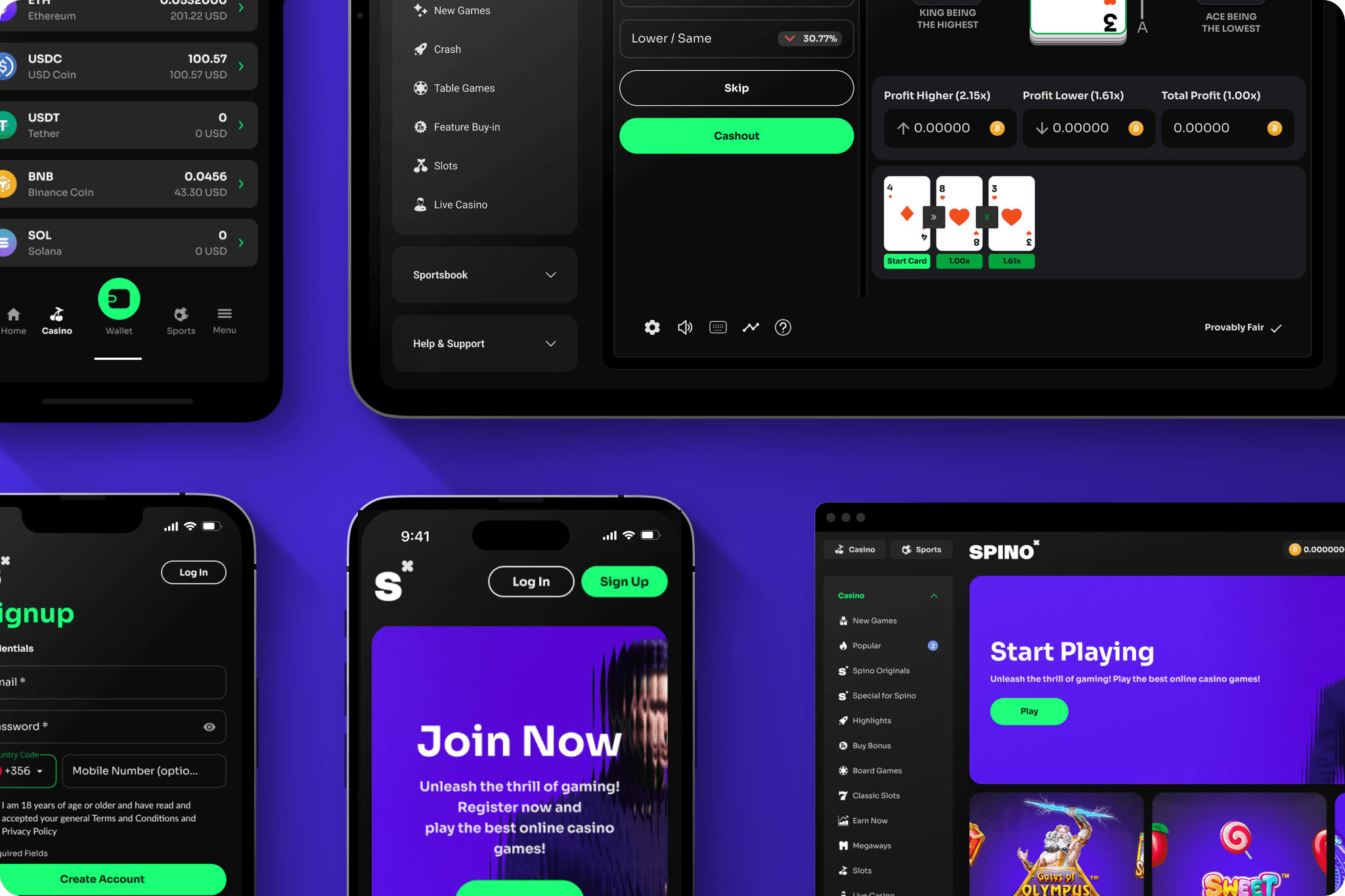
Spino
Spino
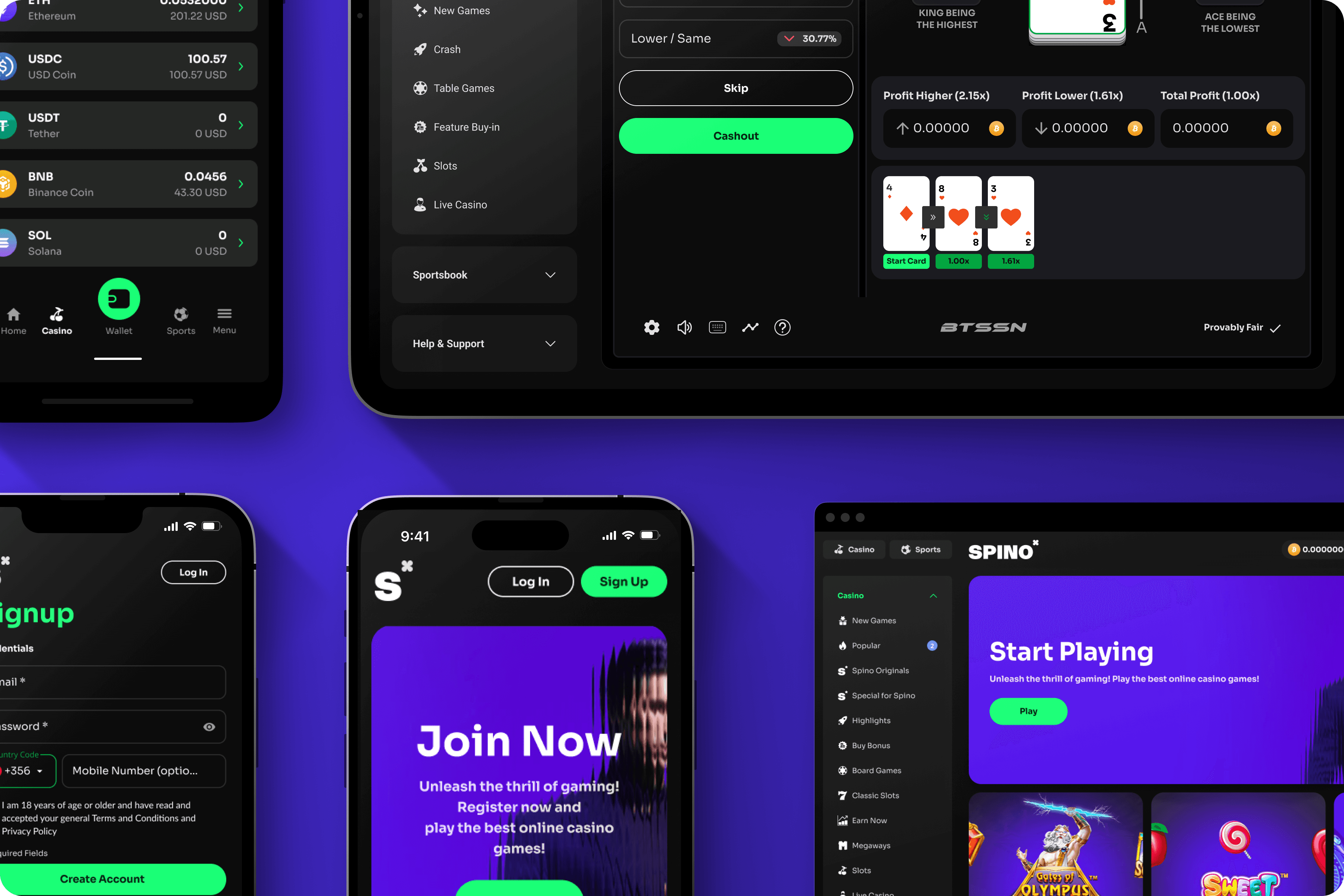
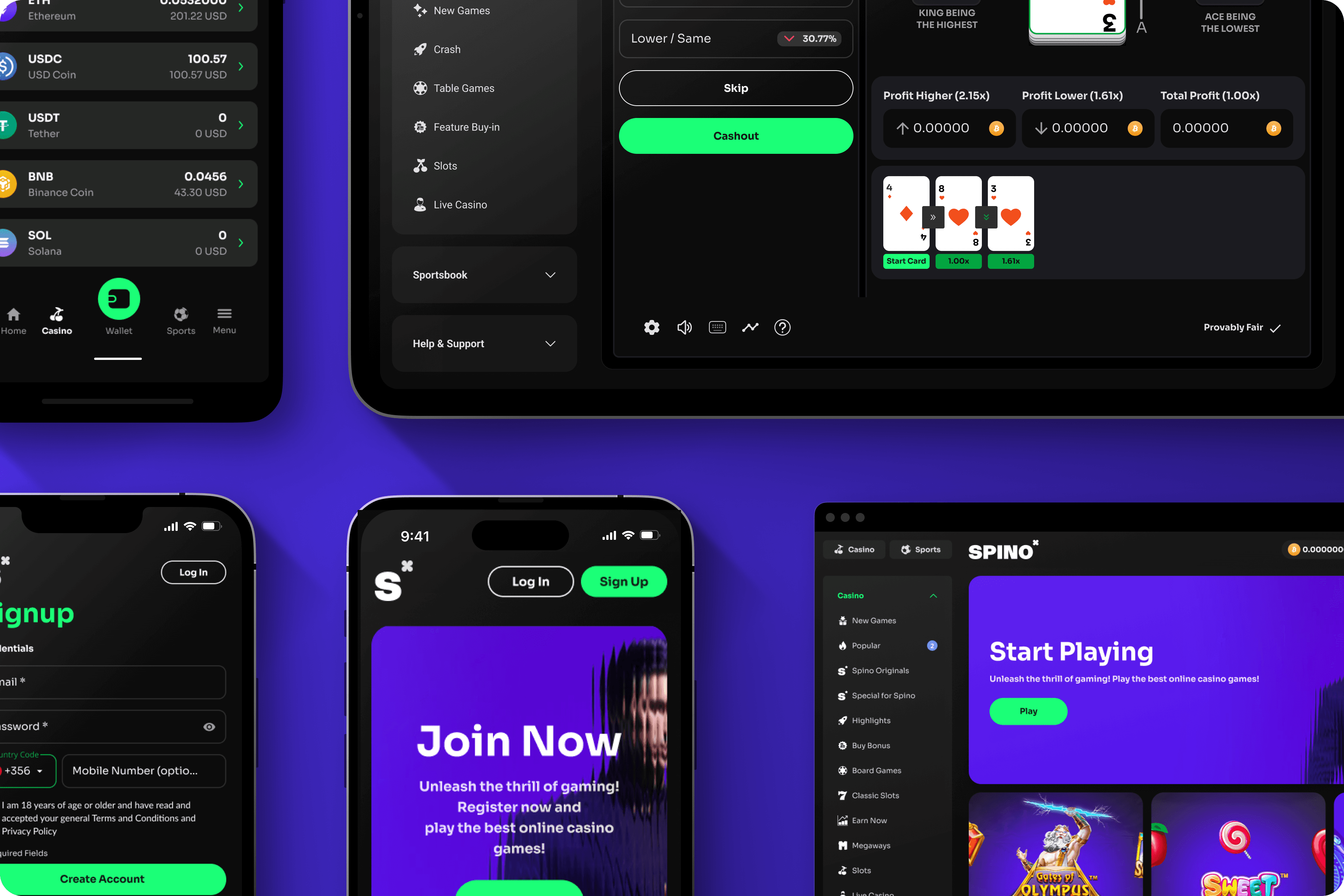
Spino was the first project I launched from start to finish on my own.
This brand was a startup that went live on December 2, 2025, as Betsson’s first crypto-based website. During this project, I worked as the sole designer, leading the entire design process - from creating the design system to delivering assets to developers, supporting development, and participating in UAT sessions.
Spino was the first project I launched from start to finish on my own.
This brand was a startup that went live on December 2, 2025, as Betsson’s first crypto-based website. During this project, I worked as the sole designer, leading the entire design process - from creating the design system to delivering assets to developers, supporting development, and participating in UAT sessions.
Introduction
Introduction
Background
Background
I joined this department a year after it was initiated and based my designs on the work previously done. When reviewing earlier designs and workflows, I noticed they were not fully up to standard. At Betsson, we typically work with a design system, but this project was a complete startup that didn’t follow our usual templates. The previous designer had the freedom to work outside the box, which was great for creativity but not sustainable in the long run.
When I stepped into the team, I realized there were many inconsistencies and missing flows. The way of working in Figma was not scalable for a growing brand.
My first step was to take a step back and redesign the entire design system from scratch. This allowed us to use components, variants, and most importantly, Token Studio. Token Studio enables us to attach each colour to a variable, making it easy to switch between brands. By doing this, I built a complete database for the brand that works seamlessly for developers and any future designers joining the team.
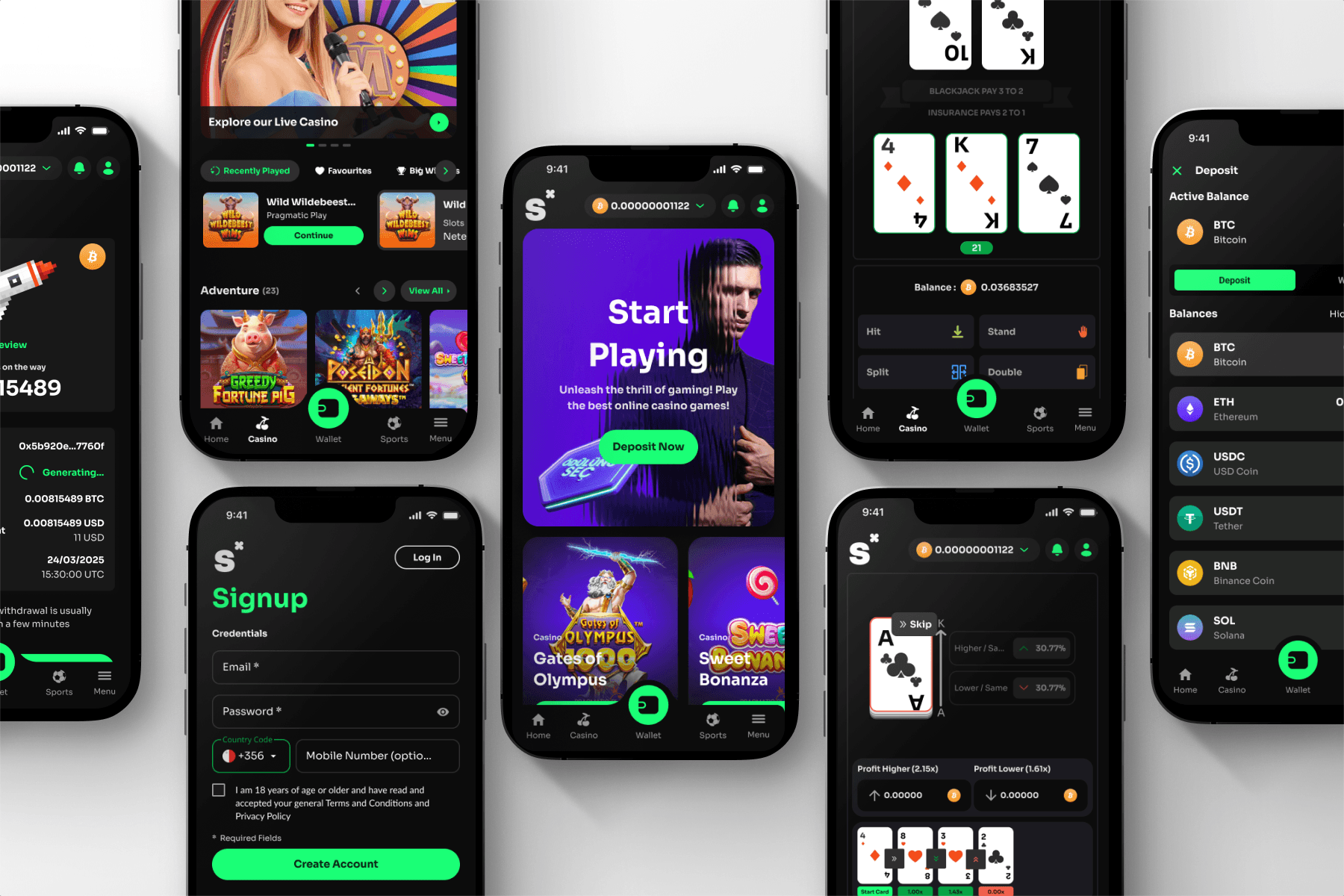
As the brand started taking shape, our product team introduced Spino, Betsson's first crypto based B2B brand. When the client provided a set of colours and fonts, I created a mockup and presented the homepage based on their preferences. The chosen variant was then integrated into Token Studio, and all necessary variables were pushed to the code repository for developers to implement accurately.
Now that the brand is live, we have ongoing testing and maintenance. I am currently leading UI improvements to make the site more effective and valuable for our clients.
I joined this department a year after it was initiated and based my designs on the work previously done. When reviewing earlier designs and workflows, I noticed they were not fully up to standard. At Betsson, we typically work with a design system, but this project was a complete startup that didn’t follow our usual templates. The previous designer had the freedom to work outside the box, which was great for creativity but not sustainable in the long run.
When I stepped into the team, I realized there were many inconsistencies and missing flows. The way of working in Figma was not scalable for a growing brand.
My first step was to take a step back and redesign the entire design system from scratch. This allowed us to use components, variants, and most importantly, Token Studio. Token Studio enables us to attach each colour to a variable, making it easy to switch between brands. By doing this, I built a complete database for the brand that works seamlessly for developers and any future designers joining the team.
As the brand started taking shape, our product team introduced Spino, the first brand we planned to roll out, a real-money and B2B brand. When the client provided a set of colours and fonts, I created a mockup and presented the homepage based on their preferences. The chosen variant was then integrated into Token Studio, and all necessary variables were pushed to the code repository for developers to implement accurately.
Now that the brand is live, we have ongoing testing and maintenance. I am currently leading UI improvements to make the site more effective and valuable for our clients.
Goals
Goals
The goal of this product was to deliver Betsson’s first fully functional crypto iGaming platform, a bold step into a new era of online gaming. In addition to enabling secure and seamless cryptocurrency transactions, the project introduced a set of original games designed and developed in-house. The focus was on creating a smooth experience for crypto users while ensuring the games reflected our commitment to quality and innovation.
The goal of this product was to deliver Betsson’s first fully functional crypto iGaming platform, a bold step into a new era of online gaming. In addition to enabling secure and seamless cryptocurrency transactions, the project introduced a set of original games designed and developed in-house. The focus was on creating a smooth experience for crypto users while ensuring the games reflected our commitment to quality and innovation.
Problems
Problems
Issues that I discovered prior to the creation of the brand:
Inconsistent Variable Styling
There was no designated design system, which led to colour inconsistencies - even within the same component.Missing Flows & Designs
Several flows and screens were missing, leaving both developers and me uncertain about how components should look or behave in specific scenarios.Outdated Components
The components used were not linked to any design system, resulting in significant maintenance work once the brand rolled out and more brands were added. This approach was not scalable, as updates had to be made manually for each instance - a process that becomes impractical with multiple brands.To address this, we agreed to start utilising Fabric components designed by our Central UX team to maintain consistency and scalability. This required extensive communication to ensure that component updates improved the design rather than introducing new issues. Our priority was to avoid anything looking outdated.
Lack of documentation
Issues that I discovered prior to the creation of the brand:
Inconsistent Variable Styling
There was no designated design system, which led to colour inconsistencies - even within the same component.Missing Flows & Designs
Several flows and screens were missing, leaving both developers and me uncertain about how components should look or behave in specific scenarios.Outdated Components
The components used were not linked to any design system, resulting in significant maintenance work once the brand rolled out and more brands were added. This approach was not scalable, as updates had to be made manually for each instance - a process that becomes impractical with multiple brands.To address this, we agreed to start utilising Fabric components designed by our Central UX team to maintain consistency and scalability. This required extensive communication to ensure that component updates improved the design rather than introducing new issues. Our priority was to avoid anything looking outdated.
Lack of documentation
Design
Design
Conclusion
Conclusion
Final Remarks
Final Remarks
Overall, the project is progressing smoothly, and we already have customers actively engaging with the site. Unfortunately, the client did not fully adhere to the documentation I provided regarding banner images and thumbnails, which makes the live website look slightly off compared to the original designs. However, the client is very happy with the site overall. For us, the next step is to focus on research to identify improvements that can increase RTP and enhance the UI.
Overall, the project is progressing smoothly, and we already have customers actively engaging with the site. Unfortunately, the client did not fully adhere to the documentation I provided regarding banner images and thumbnails, which makes the live website look slightly off compared to the original designs. However, the client is very happy with the site overall. For us, the next step is to focus on research to identify improvements that can increase RTP and enhance the UI.
Future Improvements
Future Improvements
Gamification to make the users feel more involved with the UI and visuals. Alongside providing more personalisation.
Fiat Integration to also start supporting more currencies, and expand it to more than just crypto.
Research and Testing to validate improvements and gather feedback.